Quick answer: Azure Elastic Jobs Manager lets you create and manage Azure SQL Elastic Jobs from Visual Studio, SQL Server Management Studio, or its standalone installation. After connecting to the Elastic Jobs database, create credentials if required, define a target group, add target databases, create the job and steps, configure its schedule, and monitor executions.
Azure SQL Elastic Jobs run T-SQL across multiple Azure SQL databases. Microsoft currently recommends using a user-assigned managed identity with Microsoft Entra authentication for job-agent-to-target authentication. Database-scoped credentials are also supported. For the differences between system-assigned and user-assigned identities, including lifecycle and reuse, see System-Assigned vs User-Assigned Managed Identity in Azure.
Prerequisites:
1. An Azure SQL Elastic Job agent and its job database.
2. Access to the target Azure SQL servers/databases.
3. A supported Azure Elastic Jobs Manager installation.
If you have not created the Elastic Job agent yet, follow the Azure Elastic Jobs Manager prerequisite guide. Microsoft requires an existing Azure SQL Database for the job database; current Azure guidance requires S1 or higher for the job database.
Install Azure Elastic Jobs Manager
Azure Elastic Jobs Manager is available as an extension for supported Visual Studio and SQL Server Management Studio versions, and as a standalone installation. The current product documentation covers Visual Studio 2017, 2019, 2022 and 2026, SSMS 18, 19 and 20, and standalone installation.
See the installation and activation guide for the current installation options.

1. Connect to the Elastic Jobs database
Launch Azure Elastic Jobs Manager and connect to the SQL Server that hosts the Elastic Jobs database. Enter the required authentication details. If your Elastic Job agent uses a user-assigned managed identity for target authentication, select the User-assigned managed identity option where applicable.
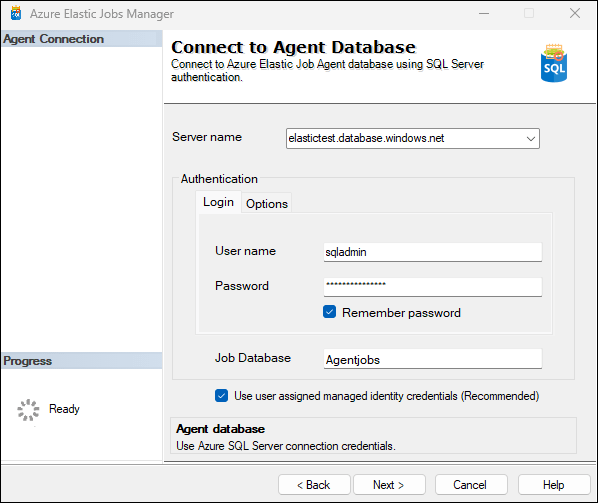
After connecting, the landing screen displays the Elastic Jobs objects you can manage.

2. Create job credentials
If you are using database-scoped credentials instead of managed identity authentication, create the credential used by the job steps. Click New Credentials and configure the required credential.
If you use the recommended user-assigned managed identity authentication, follow the product’s managed identity setup guide instead.

3. Create a target group
A target group defines where a job step runs. You can target individual databases, databases on a server, or databases in an elastic pool, and you can include or exclude specific databases.
Click New TargetGroup to create a group, or double-click an existing group to edit it.
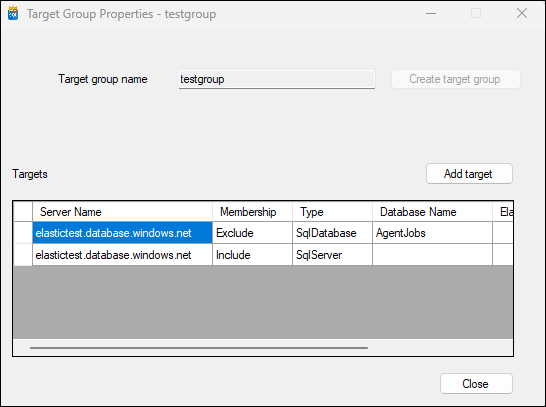
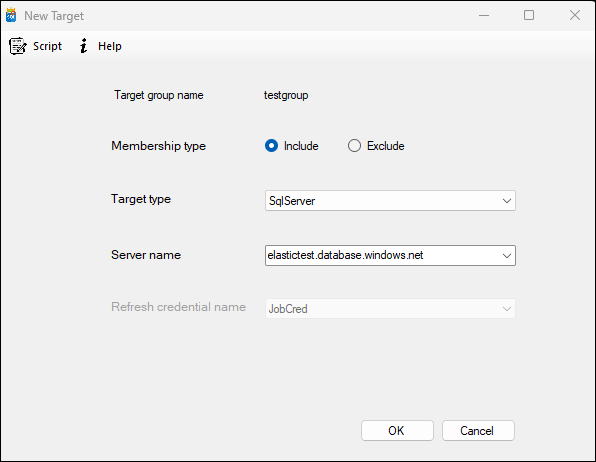
Click Add target, choose the target type and required settings, and select OK.
Available on Microsoft Store
SSRS Reports Migration Wizard
A simple Windows tool for migrating SSRS reports, data sources, and related configurations between report servers.
4. Create the Elastic Job
Click New Job on the landing screen, or double-click an existing job to edit it.

Add job steps
Open the Steps page and click New to add a step. Select the target group, configure the T-SQL command and required authentication, then save the step.


Use Advanced to configure retry and timeout settings. Use Output when you want to store job output in a database table.
Configure the job schedule
Open the Schedule page in the job properties and configure when the job should run. Azure Elastic Jobs uses UTC for job start times; Azure Elastic Jobs Manager can display scheduling options using the configured time zone. Check Settings if you need to change the display time zone.

Click OK to save the job.
5. Run and monitor the job
After creating the job, you can start or stop it, enable or disable it, and view execution history from Azure Elastic Jobs Manager.

Pro tips:
1. See the Azure Elastic Jobs Manager documentation for additional features and configuration options.
2. For managed identity setup, see Create a user-assigned managed identity in Azure.
See more

Visual Studio Marketplace
SSIS Catalog Migration Wizard
Extend Visual Studio with an easy way to migrate SSIS Catalog projects.

Kunal Rathi
With over 15 years of experience in data engineering and analytics, I've assisted countless clients in gaining valuable insights from their data. As a dedicated supporter of Data, Cloud and DevOps, I'm excited to connect with individuals who share my passion for this field. If my work resonates with you, we can talk and collaborate.