Azure Data Studio (ADS) was a cross-platform data management and development tool for SQL Server, Azure SQL, and other data platforms. Microsoft retired Azure Data Studio on February 28, 2026, and it no longer receives updates, security fixes, or maintenance. Microsoft recommends moving to Visual Studio Code with the MSSQL extension for continued SQL development. Microsoft’s retirement guidance also documents replacement options for Azure Data Studio extensions.
Why is this article still relevant? The extensions below were useful Azure Data Studio capabilities in 2025 and earlier. If you are maintaining an existing ADS installation or migrating an existing workflow, this guide helps you understand what those features did and where to move next.
1. Visualize your data within Azure Data Studio
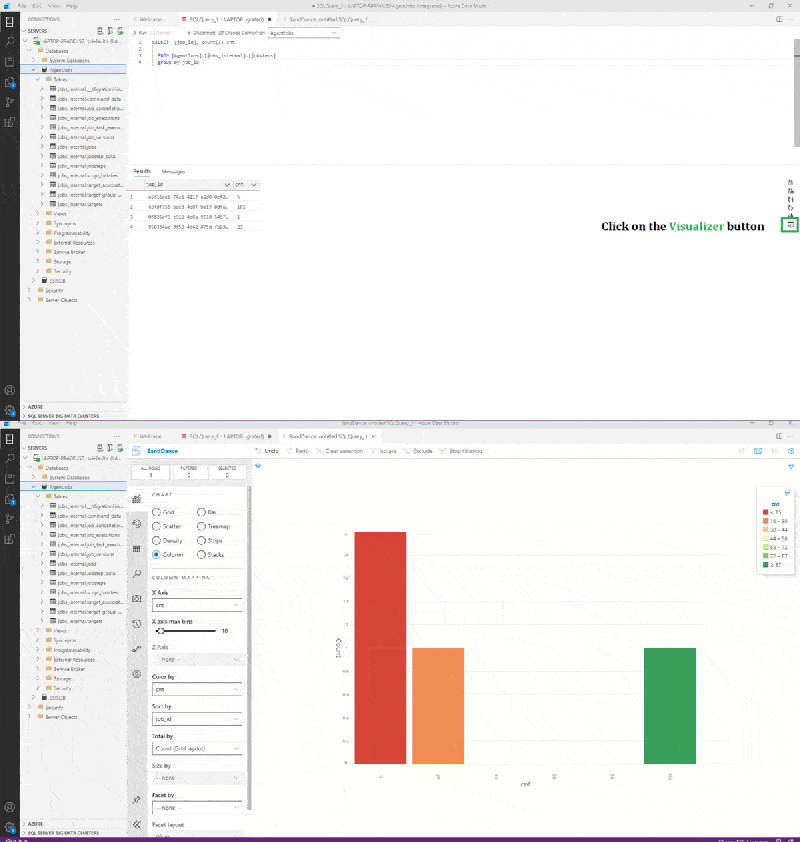
Data visualization directly inside the query environment was one of the useful Azure Data Studio capabilities. SandDance provided an interactive way to explore query results visually.
2. Jupyter notebooks for SQL analysis
Jupyter notebooks allowed developers and data professionals to combine SQL, Python, visualizations, and explanatory text in one document. This was particularly useful for analysis, troubleshooting, and documenting repeatable workflows.

3. Git source control integration
Azure Data Studio included Git integration for working with scripts and other project files under source control. This made it convenient to keep database development work alongside a Git-based workflow.

4. Integrated terminal
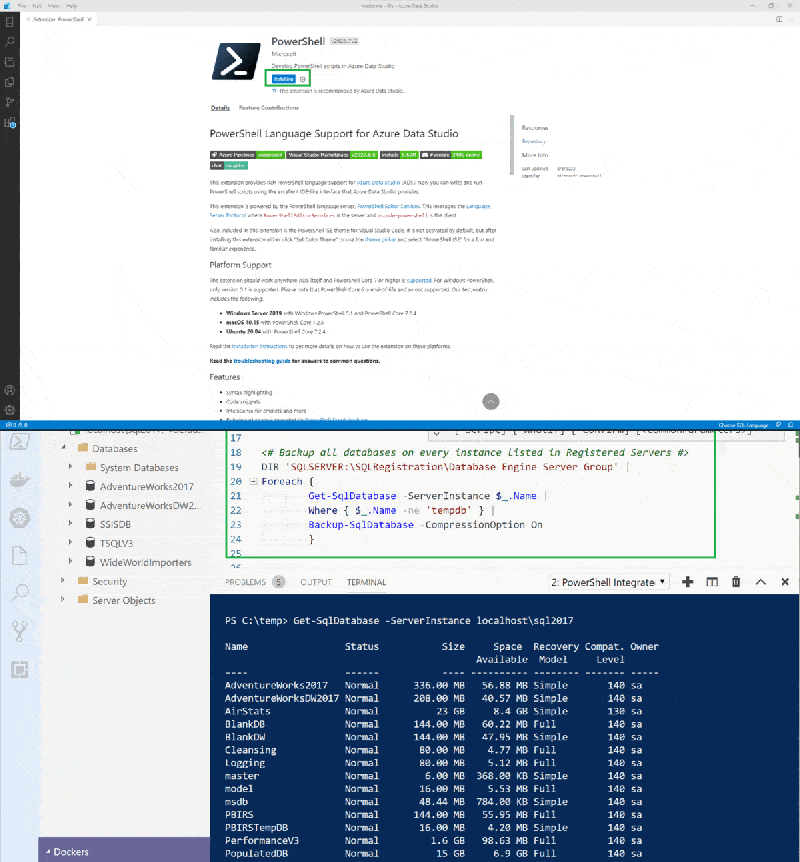
The integrated terminal allowed users to run Bash, PowerShell, BCP, SSH, and other command-line tools without leaving Azure Data Studio. This was one of the features that made ADS useful as an all-in-one development environment.
Available on Microsoft Store
SSRS Reports Migration Wizard
A simple Windows tool for migrating SSRS reports, data sources, and related configurations between report servers.
5. Other useful Azure Data Studio extensions
Azure Data Studio had an extension marketplace covering database development, administration, scripting, and productivity. Some notable extensions and extension packs included:
- Simple Data Scripter – generated INSERT scripts from query results.
- Simple Dataflow – helped copy tables between SQL Server instances.
- SQL Server Schema Compare – compared database schemas and DACPACs.
- Query History – provided access to previously executed queries.
- GitHub Copilot – provided AI-assisted development capabilities in Azure Data Studio.
- SQL Server Admin Pack – bundled administration-focused extensions such as SQL Server Agent, Profiler, Import, and DACPAC tooling.
Important: These extensions should be treated as historical Azure Data Studio tooling now that ADS has retired. Microsoft provides replacement options in Visual Studio Code and SQL Server Management Studio (SSMS), depending on the capability.

Azure Data Studio extensions: where to move now
For current SQL development, Microsoft recommends MSSQL for Visual Studio Code. Existing queries, scripts, and SQL database projects can be opened in Visual Studio Code without conversion.
- SQL development and query execution: MSSQL extension for Visual Studio Code.
- SQL database projects: SQL Database Projects extension for Visual Studio Code or SSDT in Visual Studio.
- Schema comparison: Schema Compare in the MSSQL/SQL database tooling for Visual Studio Code.
- SQL Server Agent and full administration: SQL Server Management Studio (SSMS).
- SQL notebooks: Jupyter-based SQL notebooks in the Visual Studio Code ecosystem.
Additional Azure Data Studio features
Azure Data Studio also provided features such as keyboard shortcuts, IntelliSense, code snippets, and result-grid sorting and filtering. These capabilities contributed to its lightweight developer experience.

Azure Data Studio download and retirement
Azure Data Studio 1.52 was the final general availability release, published on June 18, 2025. Microsoft retired Azure Data Studio on February 28, 2026. It is no longer supported and does not receive security updates or maintenance. For current installations and new SQL development work, Microsoft recommends migrating to Visual Studio Code with the MSSQL extension.
Conclusion
Azure Data Studio was a popular lightweight SQL development environment, and its extensions added capabilities for visualization, notebooks, source control, scripting, and administration. However, it is now retired. If you are still using Azure Data Studio, use Microsoft’s migration guidance to move your workflow to Visual Studio Code and SSMS where appropriate.
Pro tips:
1. Azure Data Studio is retired. For SQL Server and Azure SQL development, start with the MSSQL extension for Visual Studio Code.
2. For SQL Server Agent and broader SQL Server administration, use SQL Server Management Studio.
3. For a complete list of Azure Data Studio replacement options, see Microsoft’s Azure Data Studio retirement guidance.
See more

Visual Studio Marketplace
SSIS Catalog Migration Wizard
Extend Visual Studio with an easy way to migrate SSIS Catalog projects.

Kunal Rathi
With over 15 years of experience in data engineering and analytics, I've assisted countless clients in gaining valuable insights from their data. As a dedicated supporter of Data, Cloud and DevOps, I'm excited to connect with individuals who share my passion for this field. If my work resonates with you, we can talk and collaborate.