Quick answer: To migrate SSISDB to another SQL Server, use the SSIS Catalog Migration Wizard when you need a guided migration of catalog objects, environment values, parameters, and connection changes.
What Is SSISDB and What Does Migration Involve?
SSISDB is the catalog database used by the SSIS server to store deployed projects, packages, parameters, environments, permissions, server properties, and operational history. A migration therefore involves more than copying package files: the catalog, its security, configuration, and encryption material all need to be considered.
Microsoft recommends backing up the SSISDB database master key before moving the database and ensuring that the required Integration Services objects are available on the target SQL Server.
Before You Migrate SSISDB
Prerequisites:
1. Confirm that you have administrative access to the source and target SQL Server instances.
2. Confirm the target SQL Server version and Integration Services configuration.
3. Review SSIS environments, parameters, connection strings, permissions, and other catalog objects that need to be preserved.
How to Migrate SSISDB to Another SQL Server
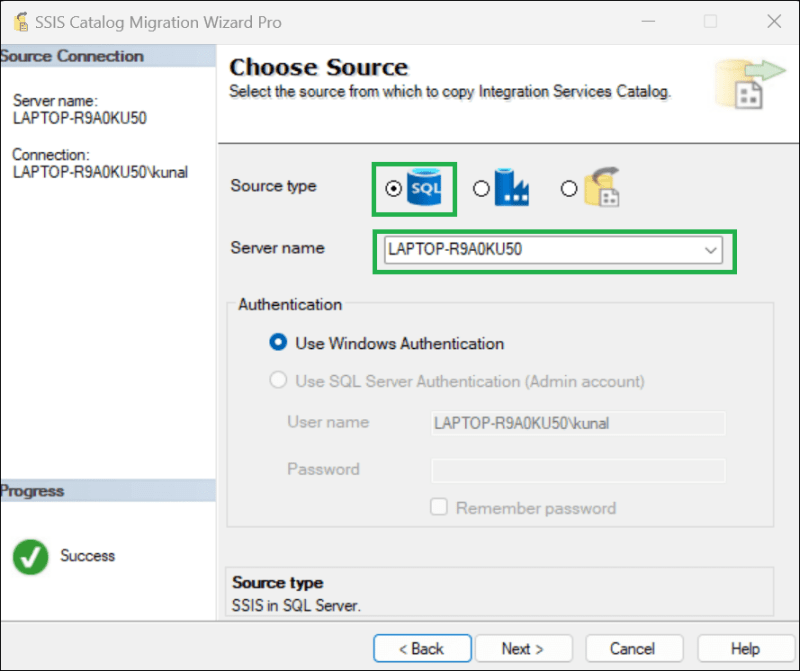
Step 1: Choose the Source SQL Server
Launch the SSIS Catalog Migration Wizard and select the source SQL Server that hosts the SSISDB catalog. The account used for the migration should have the required permissions to read and operate on the SSIS catalog.
Step 2: Choose the Target SQL Server
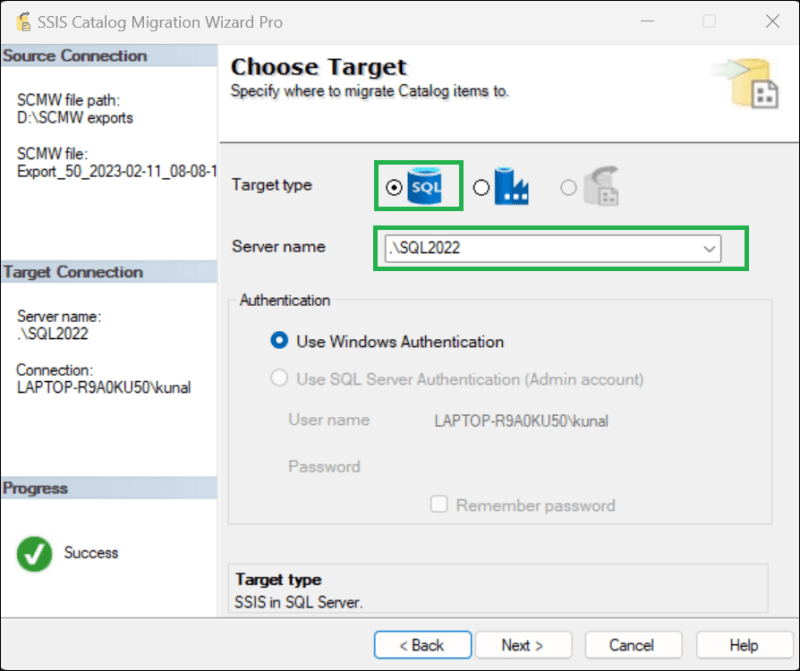
Specify the target SQL Server where the SSIS catalog will be migrated. Make sure the target Integration Services environment is prepared before starting the migration.
Step 3: Select SSISDB Catalog Items
Select the folders, projects, environments, and other SSISDB catalog items that you want to migrate. Selecting only the required objects can be useful when the target environment needs a controlled subset of the source catalog.

Step 4: Replace Environment and Parameter Values
Source and target environments often use different connection strings, server names, database names, or other configuration values. Use the replacement step to review and update environment-variable and parameter values before the migration is committed.

Step 5: Review and Complete the Migration
Review the migration summary before committing the operation. The wizard reports warnings and errors against the relevant catalog objects so that you can identify issues before treating the migration as complete.

Validate the Migrated SSIS Catalog
- Confirm that the expected folders, projects, packages, environments, and parameters exist on the target.
- Verify that environment references and connection information point to the target environment.
- Check permissions and catalog security.
- Run representative SSIS packages and confirm that their connections and parameters work.
- Review SSISDB operational history after the first test executions.
If you use native backup and restore rather than a migration wizard, also verify the SSISDB master key and any required Integration Services configuration on the target. Microsoft documents SSISDB backup, restore, and move procedures separately.
Install SSIS Catalog Migration Wizard
SSIS Catalog Migration Wizard is available as an extension for supported Visual Studio and SSMS versions and as a standalone tool. See the documentation for the current installation options and prerequisites.
Download SSIS Catalog Migration Wizard
For a visual walkthrough, see the SSIS Catalog Migration Wizard tutorial.
Pro Tips:
1. If source and target environments use different connection details, plan environment-variable and parameter replacements before migration.
2. Test representative packages on the target before switching production workloads.